



























The Mindanao State University
Mindanao State University-General Santos traces its origins to a humble yet impactful beginning in 1967 with a bold vision to provide accessible and high-quality education in Southern Mindan-ao. With support from the local government and the MSU System, it evolved into a collegiate campus by 1973 and gained full autonomy in 1981, setting the stage for its growth into a premier academic institution.
From these transformative years, MSU-General Santos continues to raise its banner as a strong-hold of knowledge, innovation, and development. Today, it is widely acknowledged for its flagship programs in engineering, agriculture, and teacher education. It has produced board topnotchers, community game-changers and leaders who have greatly contributed to their respective fields. This truly demonstrates MSU-GenSan’s enduring impact and its unwavering commitment to the development of its students and the wider society it serves.
Beyond quality instruction as one of its pillars, it has also become a driving force for inclusive education, peacebuilding, and community transformation in the Southern Philippines. The univer-sity reflects the diversity, strength, and aspirations of Mindanao’s people, serving as both an educational center and a force for social progress.
With colleges across multiple disciplines and a growing global reputation, MSU-General Santos aims to enrich academic experiences, broaden perspectives, and position itself as a proactive contributor to global education and development, continuing its mandate to serve the educational pursuits of Southern Mindanao and the Filipino nation.
At MSU-General Santos, we foster excellence.

Official Seal
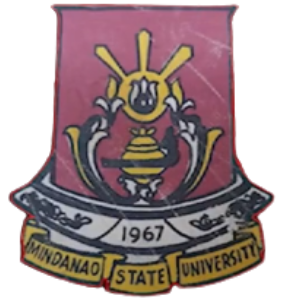
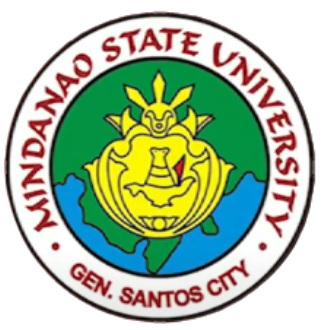
The seal is the official visual symbol of MSU-GenSan, encapsulating the university’s identity and legacy. At its center is the lamp of knowledge, symbolizing guidance and enlightenment. Surrounding it are Okir motifs, honoring Maranao cultural artistry, plus three radiant rays that represent the key regions of Mindanao, Sulu, and Palawan (MINSUPALA)—underscoring the university’s founding mandate to serve these areas. The background features the SOCCSKSARGEN Map, marking the university’s regional location.
Anatomy

The Name
The University’s name envelopes the whole centerpiece of the logo

Three Radiant Rays
Symbolizing the MINSUPALA regions

Map of Soccsksargen
Denotes campus location and regional identity

Lamp of Knowledge
Central symbol representing academic enlightenment

Okir Frame
Decorative Maranao motif honoring local culture
Vision
A leading transformative University driving excellence, research, innovation, and sustainable peace and development
Mission
To produce competent human resources committed to the development of the Philippines and to help uplift the living conditions of Muslims, Indigenous Peoples, and other underserved communities
Core Values
(I-RISE)
- Integrity
- Respect
- Inclusivity
- Service
- Excellence
BOR Resolution No. 386, S. 2025



History of Mindanao State University - General Santos
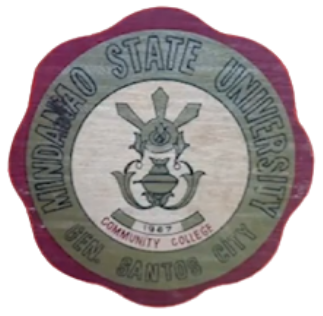
Mindanao State University-General Santos City started as a community high school in 1967, six years after the creation of MSU- Marawi Main Campus. The high school was hosted inside Dadiangas West Elementary School, a school located in the middle of General Santos City. To accommodate the growing number of students, the administration facilitated the approval of a 3.3 hectare-land donation of General Santos City Local Government located at the heart of General Santos City for the MSU-High School. By virtue of the Board of Regents Resolution No. 822, it became a full-fledged collegiate campus of the MSU System on October 10, 1973, offering two-year degree courses.
The 156-hectare land located at Barangay Fatima (previously part of Barangay Tambler) was acquired through Presidential Proclamation 2029 of 1983. This led to the growth of MSU offering various degree programs. Since then, MSU General Santos has been characterized by its continuing commitment and dedication to the communities it serves through its three functions: instruction, research and extension. The Fatima campus houses administrative offices, academic colleges: Agriculture, Education, Fisheries, Social Sciences and Humanities, Natural Sciences and Mathematics, Engineering, Business Administration and Accountancy, and other semi and non-academic units.
Aside from baccalaureate courses, post-baccalaureate degrees in Education, Public Administration, Business Management, Biology, Engineering, Sustainable Development Studies, and Law are being offered in response to the demand and needs of the teachers, government workers and other professionals in the locality. These are all offered in the MSU-CETD Campus as evening or weekend classes. Another campus located in Barangay Siguel, General Santos City serves as the field laboratory for the College of Fisheries. Furthermore, MSU-General Santos also catered to the Basic Education needs of its serviced communities through its laboratory junior high school, Mindanao State University-College of Education Training Department (MSU-CETD) and its Senior High School Department.
The university has also become a member of the Accrediting Agency of Chartered Colleges and Universities in the Philippines (AACUP) on December 31, 2014 and has since accredited a number of its baccalaureate and post-baccalaureate degree programs.
Himno ng Pamantasang Mindanao
Music by Lucio San Pedro
Lyrics by Prof. Angelito G. Flores
MSU Campuses

MSU Main Campus
MSU Iligan

MSU Naawan

MSU GenSan

MSU Tawi-Tawi
MSU Buug

MSU Maigo

MSU Maguindanao

MSU Sulu
MSU LNAC

MSU LNCAT